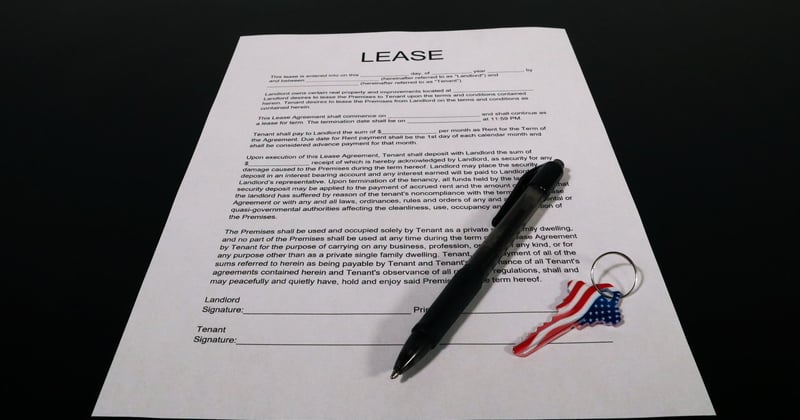
Two weeks before my lease renewal, my landlord sent me a number. It was $95 more than what I was paying. I sent back a counteroffer, three lines long, and we settled at $40 more, with a two-year term and a fresh coat of paint in the hallway. Total time spent: about twenty minutes of thinking and one email. That gap between the number he sent and the number I signed is the entire subject of this article, because most tenants never ask, and the ones who do often ask badly.
Negotiating rent with a landlord is not a confrontation. It is a trade. You have something they want (a tenant who pays on time and stays), and they have something you want (a lower number or better terms). The trick is knowing how to negotiate rent price with landlord leverage on your side, and how to ask without sounding like you are threatening to walk out the door.
Key Takeaways
- Rent is negotiable at three moments: before signing, at renewal, and sometimes mid-lease if the market shifts or conditions change.
- Always research comparable units first; a request without market data is just a wish.
- Offer something in return—a longer term, a stronger deposit, a flexible move-in date—so the landlord can say yes without losing money.
- Timing matters: a renewal request sent 60–90 days ahead lands far better than one sent in the final week.
- Put everything in writing, and get any agreed change added to the lease before you sign it.
Is rent really negotiable, or is that just internet optimism?
Yes, it is negotiable—but not everywhere, and not always by the same amount. The single biggest variable is vacancy. A landlord with a unit sitting empty for six weeks is a landlord who will listen. A landlord in a building with a waiting list will not move a dollar. Before you draft anything, find out which one you are dealing with.
The best window: before you sign
This is the strongest position you will ever hold. A vacant unit costs the landlord money every single day it sits empty—mortgage, insurance, utilities, and the cost of re-listing it. That is why negotiating before signing tends to work better than at any other point. Here is how to negotiate rent price before signing without annoying anyone:
- Ask how long the unit has been vacant. A polite "how long has it been on the market?" is a normal question, not a hostile one.
- Gather two or three comparable listings in the same area, with the same number of bedrooms, and note their asking prices.
- Pick a number that is realistic—usually a modest reduction off the asking rent, not a fantasy figure.
- Attach an incentive: a longer lease, a larger security deposit, or a move-in date that suits the landlord's calendar.
I once asked a landlord how long the unit had been empty. He said "about two months." That one sentence told me more than any market report could, and it changed the tone of the entire conversation.
The second window: renewal time
At renewal, your leverage is different. You are not competing with other applicants—you are competing with the landlord's cost of finding a new tenant. A turnover means cleaning, repainting, advertising, screening, and a period with no rent coming in. That cost is real and landlords know it. Use it, politely.
Send your request well before the renewal date. Sixty to ninety days ahead is reasonable; the last week is not. In that email, mention your payment history, how long you have lived there, and any improvements you have made or problems you have reported responsibly. Then make your ask.
Can you negotiate rent after signing the lease?
Rarely, and not through asking alone. Once the lease is signed, both sides are bound by it. The exceptions are narrow: the lease itself allows for renegotiation, the conditions of the property change materially (a broken heating system, for example, or a loss of amenities you are paying for), or the local rules give you a specific right to request a change. If none of those apply, your realistic options are to wait until renewal or to negotiate an early termination in exchange for a clean exit. Ask a local tenant advocate or a housing authority what applies in your area—rules differ widely by city and country.
How to ask your landlord to lower your rent (with a script)
Most tenants write something like "Hi, is there any chance you could lower the rent?" That question is easy to answer with one word, and the word is usually no. A good request gives the landlord a reason, a number, and an easy way to agree.

A three-paragraph email you can adapt
Here is the structure I have used. Keep it short—long emails read as desperate.
- Open with your track record. "I have rented this unit for two years and have never been late with rent." One sentence.
- State the evidence. "I have been watching listings in the area, and comparable two-bedroom units are currently advertised below what I am paying." Do not list ten properties; two is enough.
- Make a specific offer with something attached. "Would you consider a reduction that brings my rent closer to those listings, in exchange for a two-year renewal?"
Notice what is missing: no threats to leave, no emotional argument, no mention of how much you love the neighborhood. Landlords respond to numbers and to the certainty of a stable tenant, not to sentiment.
What if you deal with a property management company?
This is a different game. An individual landlord can decide on the spot. A property manager usually works from an owner's instructions and has limited discretion. You can still negotiate rent with a property management company, but adjust your approach: address the person who actually has authority (ask directly who sets the rent), and frame your request in terms they can pass upward—market comparison, lease length, low-risk tenant. If the first person says no, ask whether the owner might consider it. A polite "could you forward this to the owner?" costs nothing.
What is the 50/30/20 rule for rent?
The 50/30/20 rule divides after-tax income into three buckets: half for needs (rent, utilities, groceries, transport), a third bucket of 30% for wants, and 20% for savings and debt repayment. Rent sits inside the "needs" half, which means it is not supposed to swallow the whole 50% by itself—utilities and food still have to fit alongside it.

Here is the catch: in most expensive cities, the rule is simply unrealistic. Many financial advisers use a separate guideline of spending no more than roughly a third of gross income on housing, and even that is out of reach for plenty of people. I think the 50/30/20 rule is a useful pressure gauge rather than a hard limit—if rent is eating most of the needs bucket, that is your signal to negotiate hard or consider a different area. It is not a pass/fail test, and treating it as one just makes people feel like failures.
What salary do you need to afford $1,200 rent?
Using the common 30%-of-gross-income guideline, a rent of $1,200 works out to a required gross income of roughly $48,000 a year. Most landlords apply a similar multiple themselves—often around three times the monthly rent—so that figure will come up in screening whether you like it or not.

Whether that income is actually enough depends on what else is in your budget. In a city where you need a car to get to work, or where utilities run high, the same $1,200 buys a very different life than it would somewhere walkable. Run your own numbers on take-home pay, not on the rule of thumb. If the ratio feels tight, that is precisely the situation where negotiating the rent before signing is worth the effort.
| Negotiation moment | Your leverage | What to offer | Realistic outcome |
|---|---|---|---|
| Before signing | High—an empty unit costs the owner money | Longer lease, larger deposit, flexible move-in | Modest reduction or extra terms |
| At renewal | Medium—turnover is costly for the landlord | Multi-year commitment, reliable payment record | Smaller increase than proposed |
| Mid-lease | Low—the contract binds both sides | Usually nothing | Rarely works without a change in circumstances |
| With a property manager | Depends on the owner's instructions | Clear market data, low-risk tenant profile | Slow, but not impossible |
The mistakes I made (so you don't have to)
My first attempt at negotiating went badly. I opened with "I've seen cheaper places nearby," which was true but vague, and I had no listing to back it up. The landlord replied with "then you're welcome to look at them," and the conversation died. Lesson one: never make a claim you cannot support with a specific listing.
Lesson two came later, when I negotiated a reduction without putting it in the lease. The verbal agreement evaporated at the next renewal. Get it in writing. Every time.
And a third, subtler one: I once asked for a reduction in the middle of a lease, just because I felt the market had softened. It wasn't a terrible conversation, but nothing came of it—the landlord had no reason to move. Timing, again.
One last thing about the number you send
The most common mistake is not the wording of the email. It is the anchor. If you ask for a tiny reduction, you signal that you did not really research the market. If you ask for something absurd, you signal that you are not serious. The sweet spot is a figure you can justify with a specific comparison—and then stay quiet. The silence after your number is sent is uncomfortable, and that discomfort is the negotiation.
Most people never send the email at all. That is the real reason rents go up: not because landlords are ruthless, but because tenants accept the first figure without testing it.